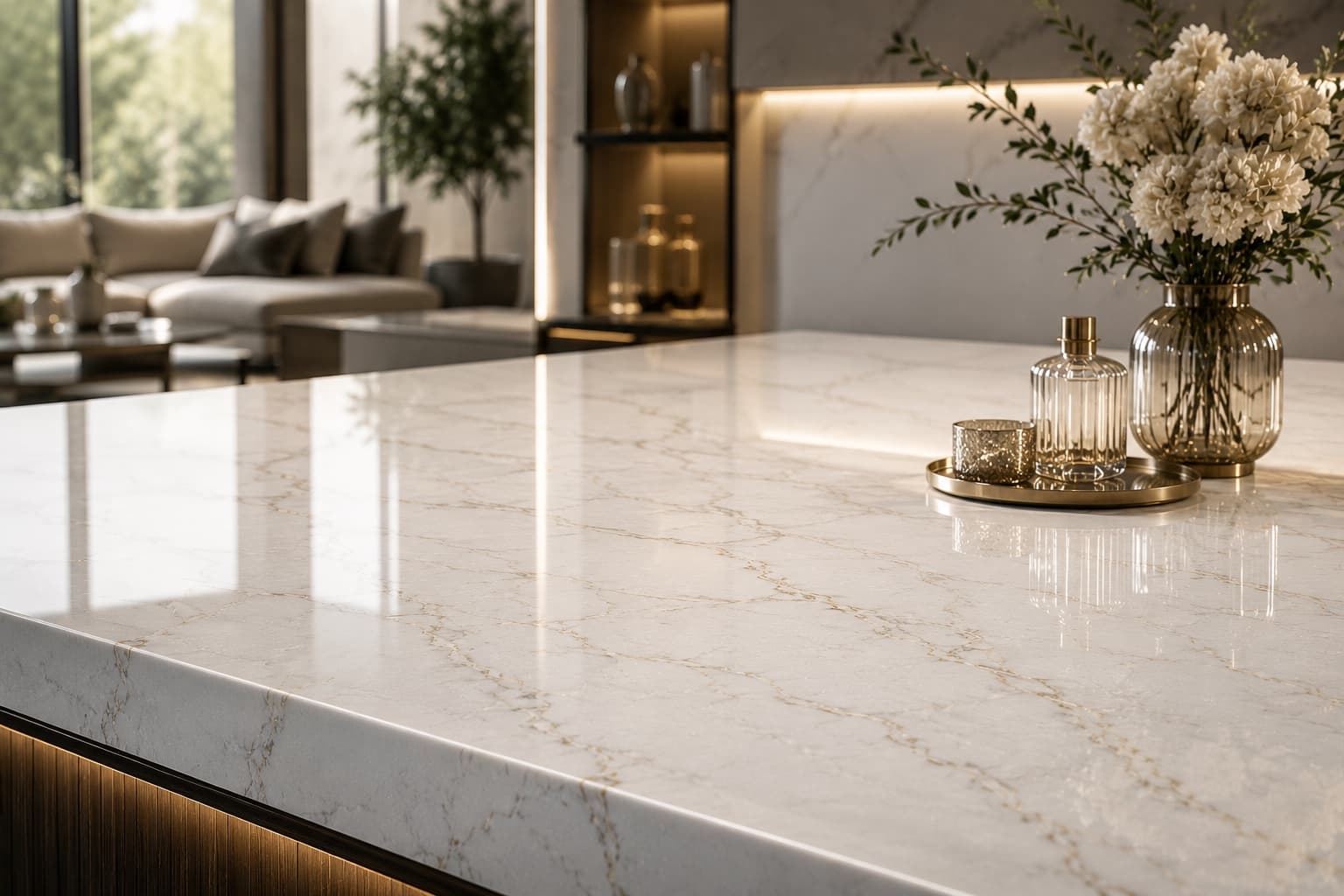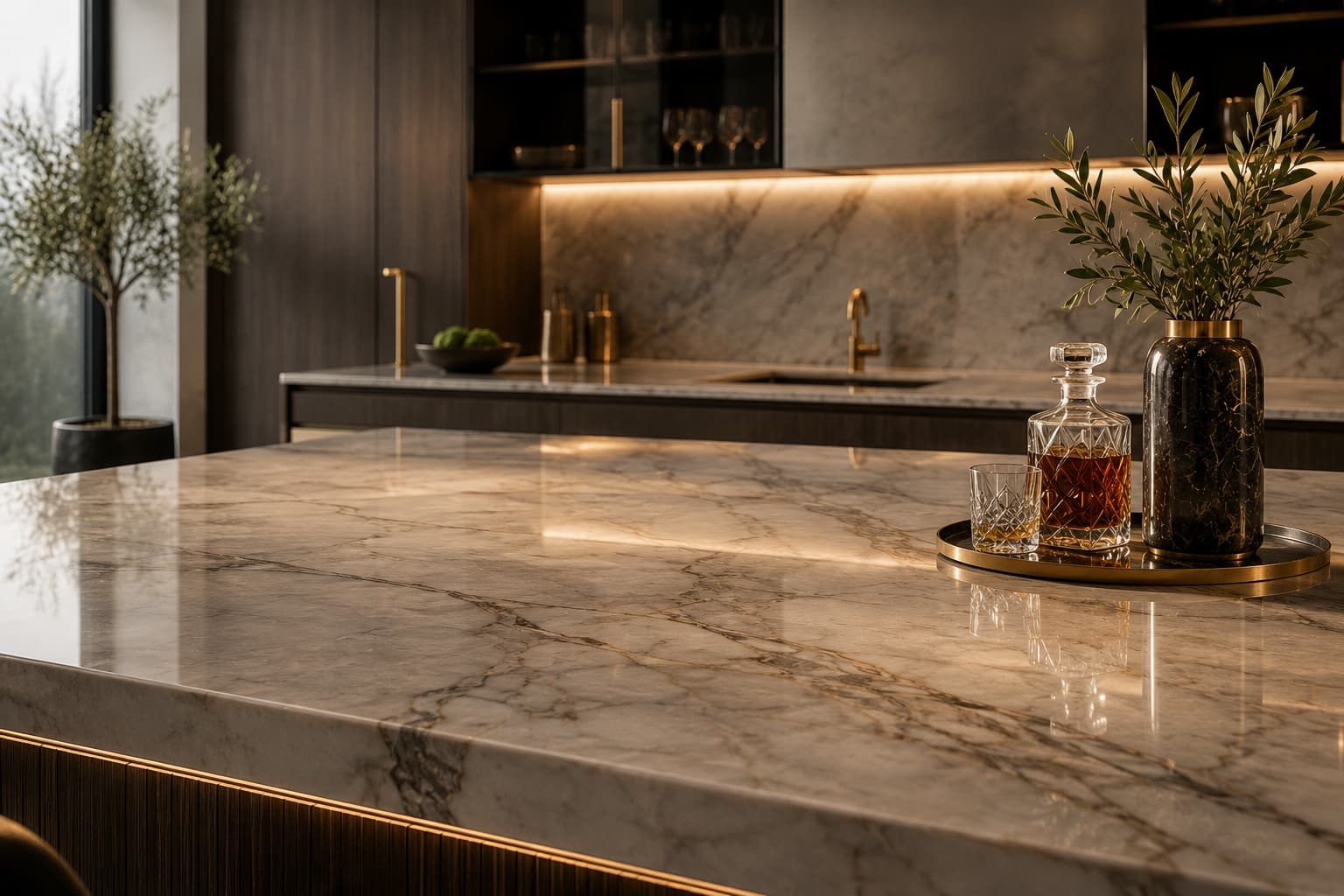
The edge is the detail that ties everything together
Most homeowners spend a lot of time choosing their stone material and finish — and then make a quick decision on the edge profile at the end of the selection process. That's understandable, but the edge is actually one of the most visible elements of a countertop. It's what you see when you walk into a kitchen from the side. It's what your hand touches every time you lean against the counter. Getting it right matters.
Included: Standard (Flat Eased Edge)
The flat eased edge is included with every fabrication at no extra charge. It's a clean 90° profile with a subtle machine ease on the top corner — sharp without being aggressive. In modern and contemporary kitchens with clean lines and minimal ornamentation, it's often the best choice. Don't overlook it because it's the 'default' — it's default for a reason.
Group A: Half Bullnose, Bullnose, Crescent
Group A profiles are the most popular upgrades. The Half Bullnose rounds the top edge while keeping the face flat — a friendly, versatile profile that works across traditional, transitional, and contemporary kitchens. The full Bullnose rounds the entire edge top to bottom and is the safest, most comfortable option for households with children or for bar seating where people lean against the counter.
The Crescent is a subtler choice — a gentle concave arc along the top edge that catches light in a distinctive way without being ornate.
Group B: 1/4" Roundover, Bevel, Demi Bullnose
Group B profiles are refined and versatile. The 1/4" Roundover removes the hard corner with a soft radius — understated but much more comfortable than a sharp edge. The Bevel creates a crisp angled cut that adds strong shadow lines and reads as decidedly modern, especially on thick stone or in kitchens with flat-face cabinetry.
The Demi Bullnose rounds the top edge while maintaining a clean flat face — a middle ground that suits both contemporary and transitional spaces.
Group C: Ogee, Double Bevel, Double Roundover
Group C is where traditional and luxury profiles live. The Ogee Edge is the classic S-curve — concave leading into convex — and has been the signature edge of formal kitchens for decades. The Double Bevel and Double Roundover add symmetry by mirroring the profile on both the top and bottom of the edge, which reads especially well on thicker stone.
Group D: Chiseled Custom Edge
Group D is fully custom — hand-worked or waterjet-cut to a profile that doesn't exist on a standard menu. This is the right path for architectural statement pieces, feature walls, and installations where the edge is part of the design itself rather than a finishing detail.
How to decide
Match the edge to your cabinet style first. Flat-face, shaker, and frameless cabinets pair naturally with clean profiles (Flat Eased, Bevel, 1/4" Roundover). Raised-panel and detailed traditional cabinets pair better with rounded or decorative edges (Half Bullnose, Ogee).
Then consider who uses the space. Bullnose and rounded profiles are more comfortable and forgiving for children and pets. Sharp bevels look great but can be uncomfortable against bare arms at a breakfast bar.
We keep physical edge samples at our Kent showroom. Run your hand along each one before deciding — the tactile difference between profiles is something no photo can convey.