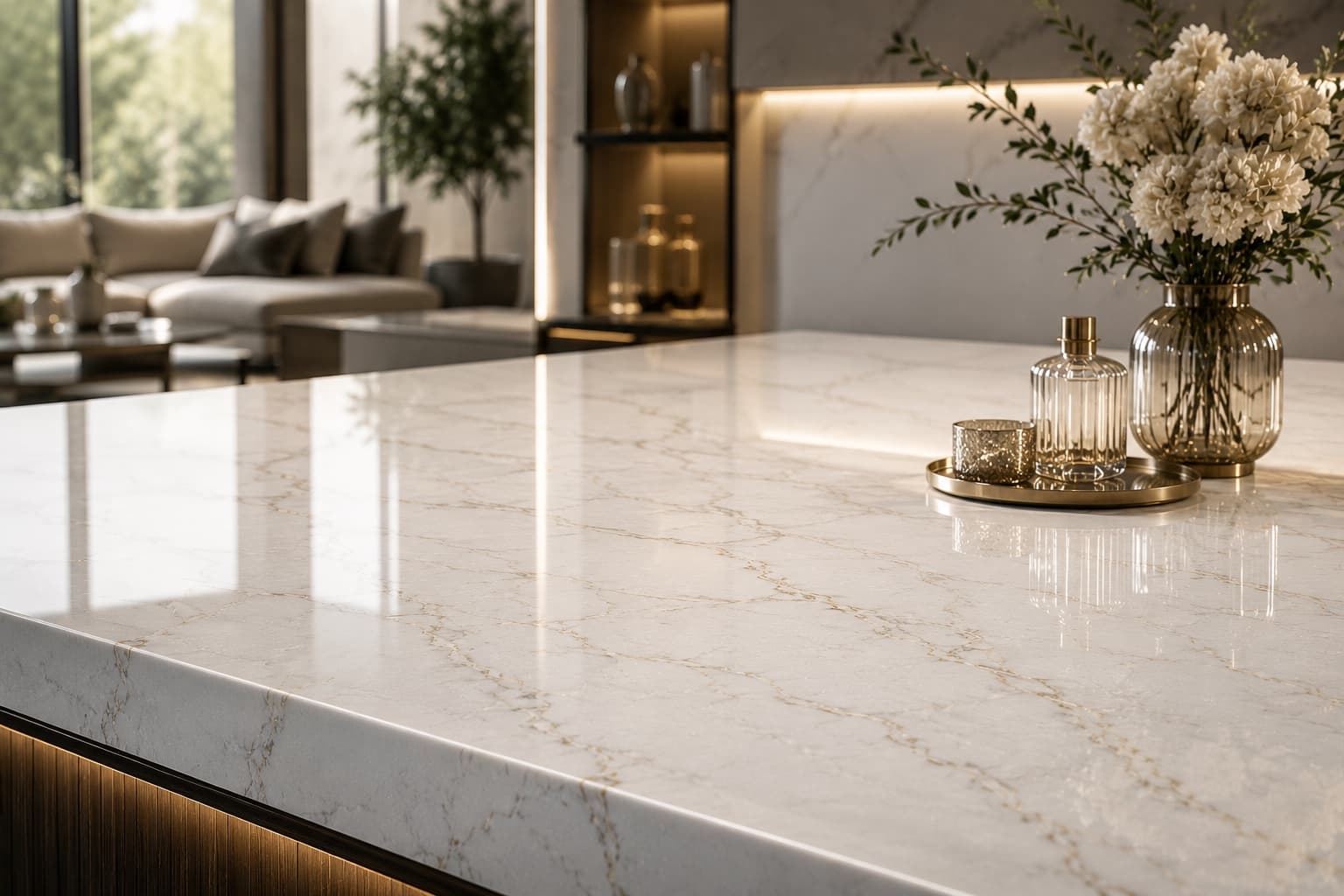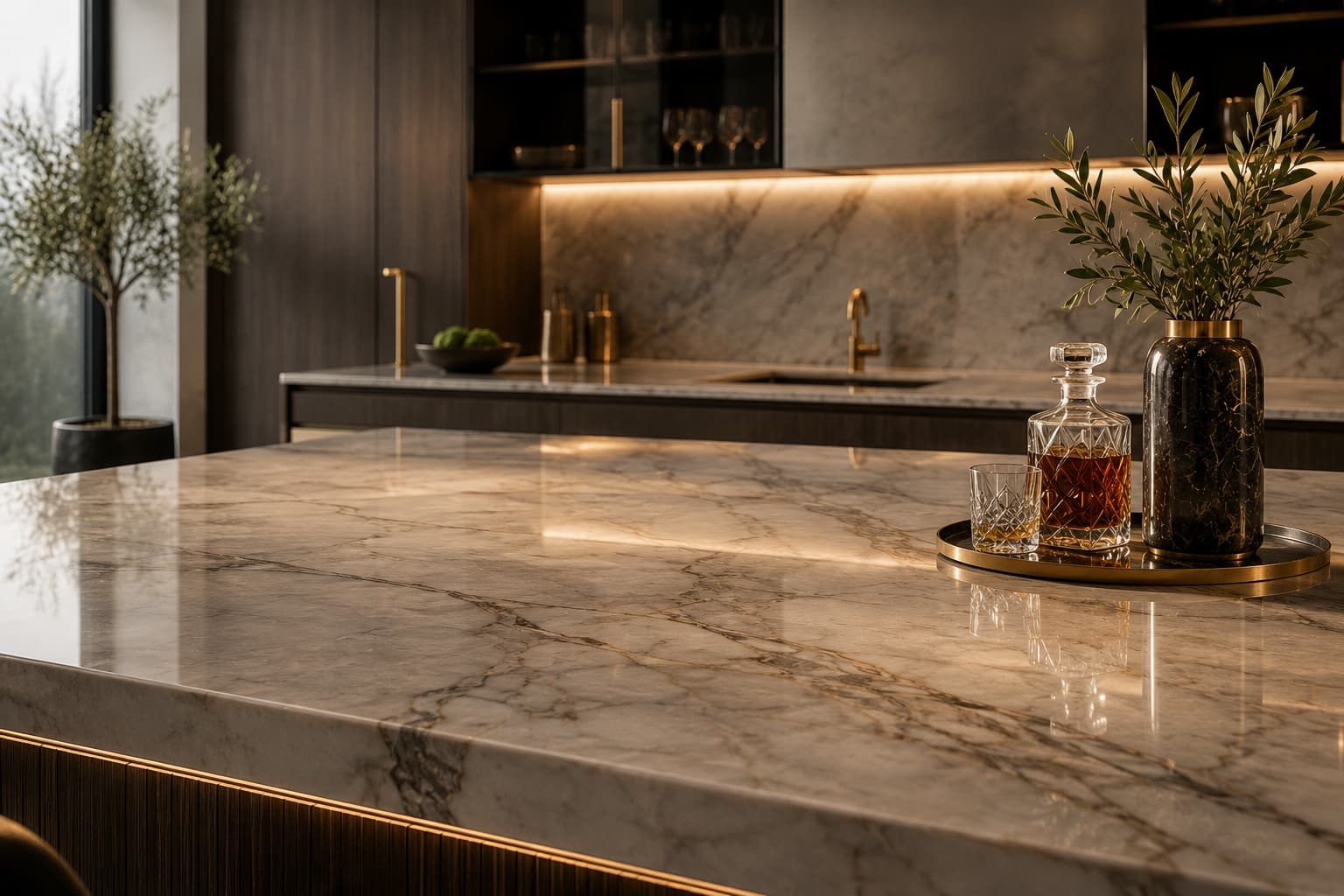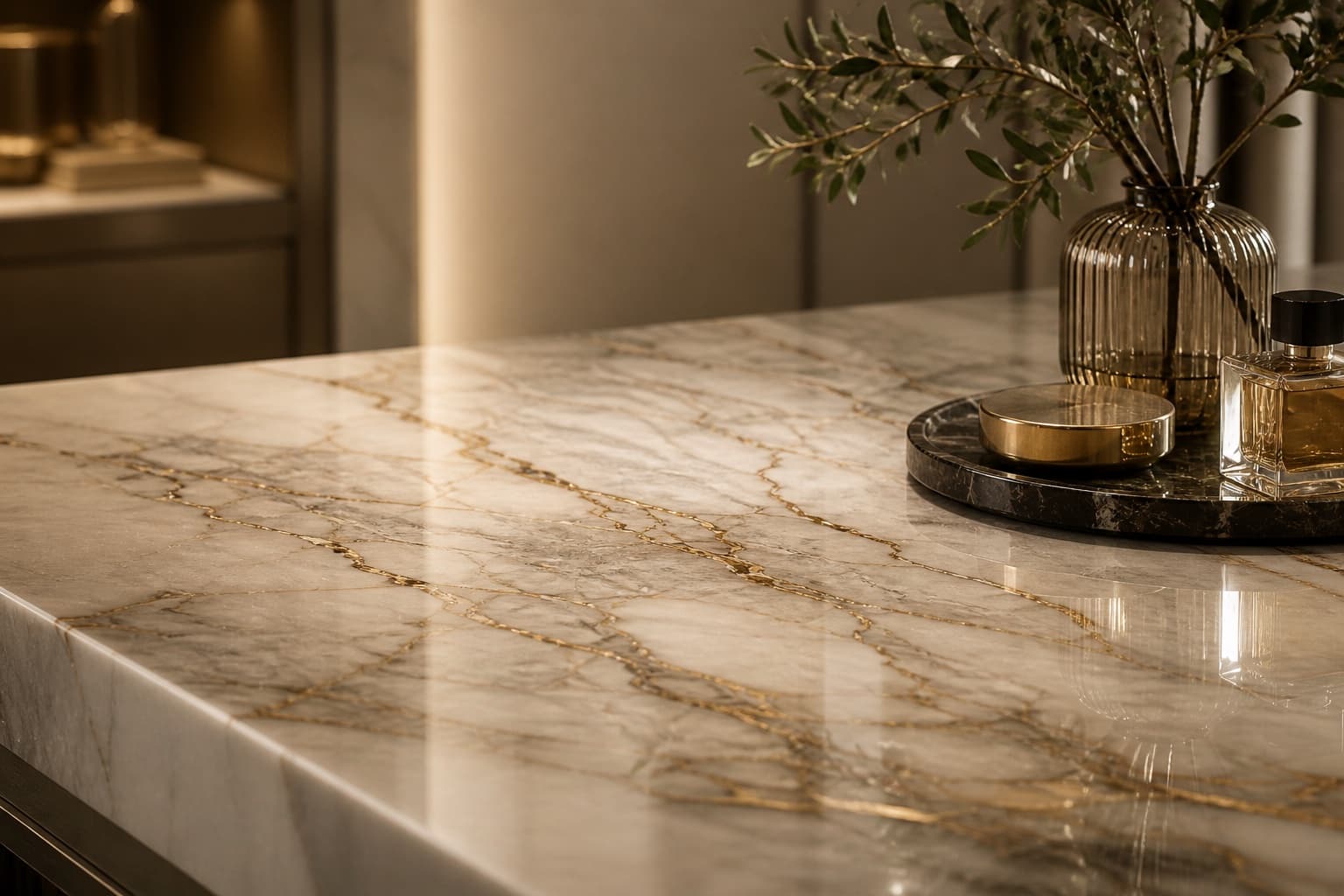

Marble rewards attentive owners
Marble is one of the most beautiful countertop materials available — and one of the most misunderstood. Homeowners who understand what marble needs tend to have stunning surfaces that age gracefully for decades. Those who don't can end up with etching, staining, and dull patches within a year.
Here's what you actually need to know.
Sealing: the non-negotiable
Marble is calcium carbonate — a relatively porous stone that absorbs liquids if left unsealed. A quality penetrating sealer (we recommend Tenax Proseal or StoneTech BulletProof) applied annually in a kitchen will dramatically reduce staining from wine, oil, and coffee.
To test if your marble needs resealing: put a few drops of water on the surface. If the water beads up, you're protected. If it darkens the stone within a few minutes, it's time to reseal. The application itself takes about 30 minutes and is a straightforward DIY task.
Acid etching: the real threat
Staining is manageable. Etching is the harder problem. Acid etching happens when acidic substances — lemon juice, vinegar, wine, tomatoes, citrus cleaners — chemically react with the calcium carbonate in marble and dissolve the polished surface. The result is a dull, matte spot that looks like a water stain but won't wipe away.
Prevention: use cutting boards, wipe spills immediately, and never use acidic cleaners on marble. Keep a pH-neutral stone cleaner (Stone Care International, Method Daily Granite) on the counter for daily use.
If etching has already occurred: light etching can sometimes be buffed out with a marble polishing powder (Miracle Sealants 511 Marble Polishing Powder). Deep etching requires professional honing — our restoration crew handles this regularly.
Daily cleaning
Use a soft cloth or microfiber towel and a pH-neutral stone cleaner. Avoid anything with bleach, ammonia, or vinegar — common household cleaners like Windex, Soft Scrub, and most bathroom sprays will damage marble over time.
For stuck-on debris, use a plastic scraper and warm water rather than anything abrasive.
What to do if damage occurs
Light scratches and shallow etching: marble polishing powder applied by hand with a soft cloth can restore mild damage.
Deep scratches, significant etching, or crack repair: call us. Our restoration team uses diamond-pad polishing systems and epoxy injection for more serious damage. We work evenings and weekends for occupied spaces. Most residential marble restoration jobs take half a day.