The naming confusion
Quartz and quartzite sound nearly identical, and showroom photos of both can look almost indistinguishable. But they are fundamentally different products — one is natural stone, the other is engineered. Getting this wrong can mean years of unexpected maintenance or a surface that doesn't hold up the way you expected.
We walk customers through this distinction every day at our Kent showroom. Here's the clearest breakdown we know.
What is quartzite?
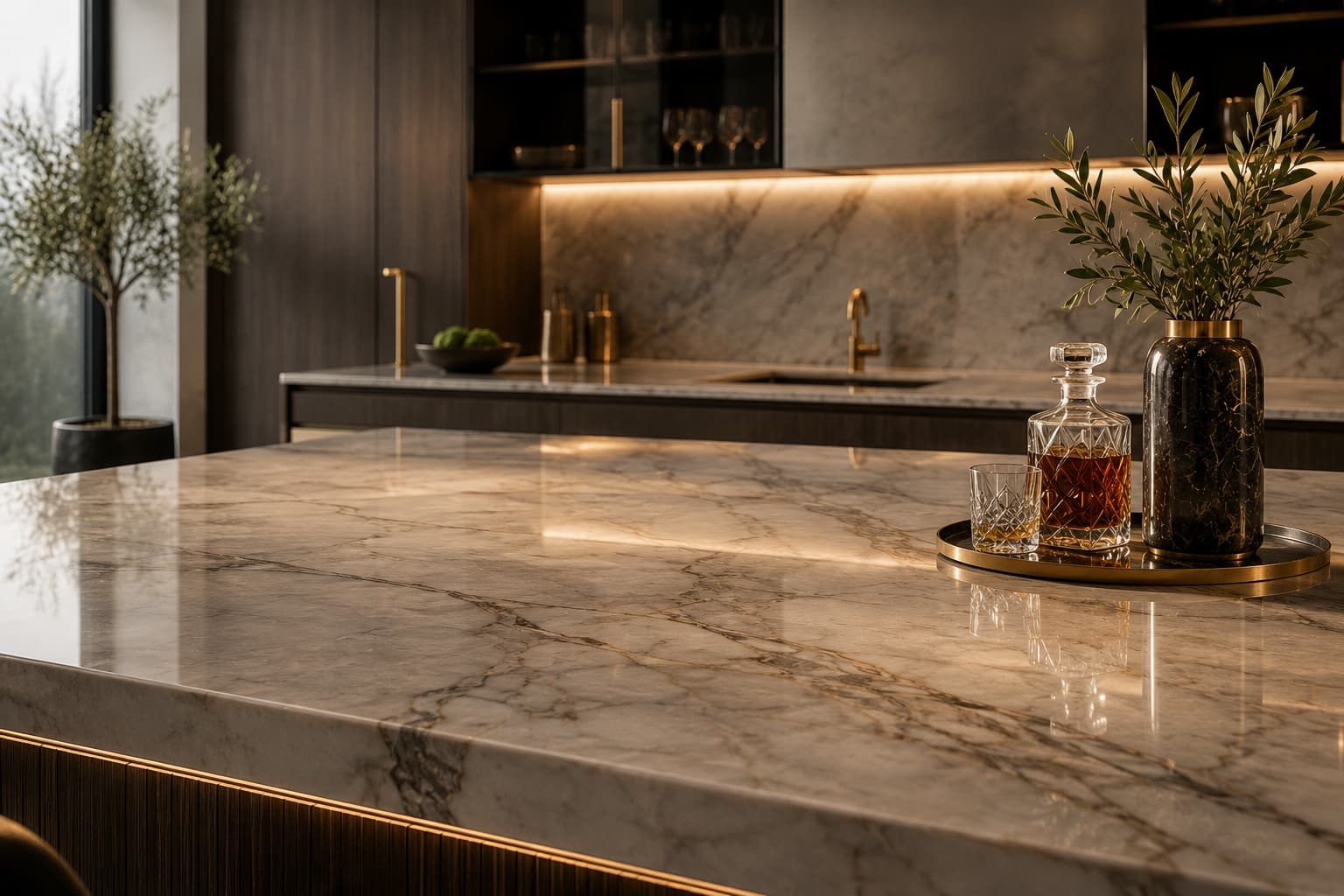
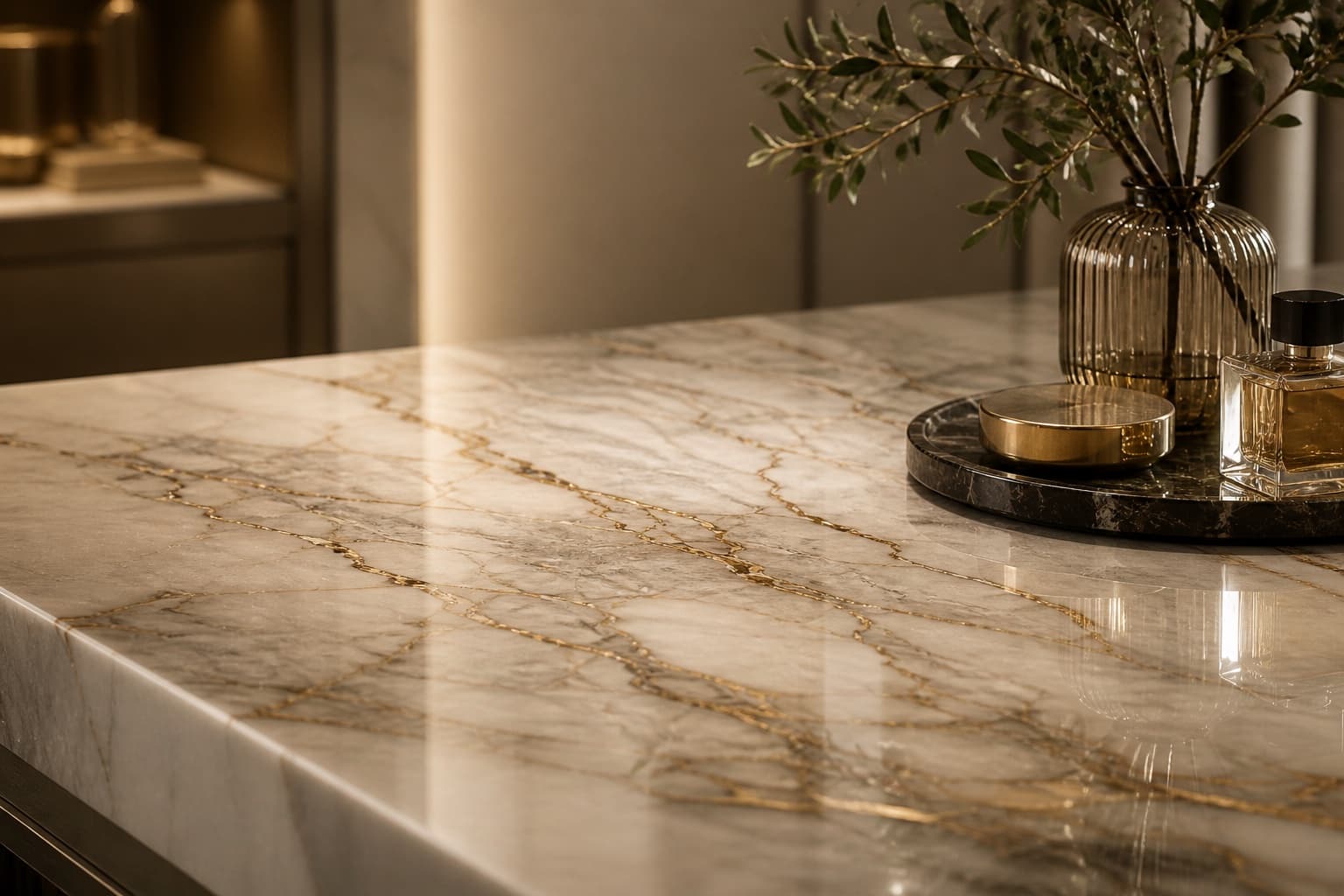
Quartzite is a natural metamorphic rock. It starts as sandstone, gets subjected to intense heat and pressure deep in the earth, and transforms into one of the hardest natural stones available. The result is a material with beautiful, sweeping veining — often white, gray, or gold — that rivals the look of Calacatta marble but outperforms it significantly in durability.
Because it's natural, quartzite is porous and does require sealing — typically once a year in a kitchen environment. It is also susceptible to acid etching from lemon juice, vinegar, and some cleaners, though far less so than marble. On the Mohs scale, quartzite registers around 7 — harder than granite.
What is quartz?
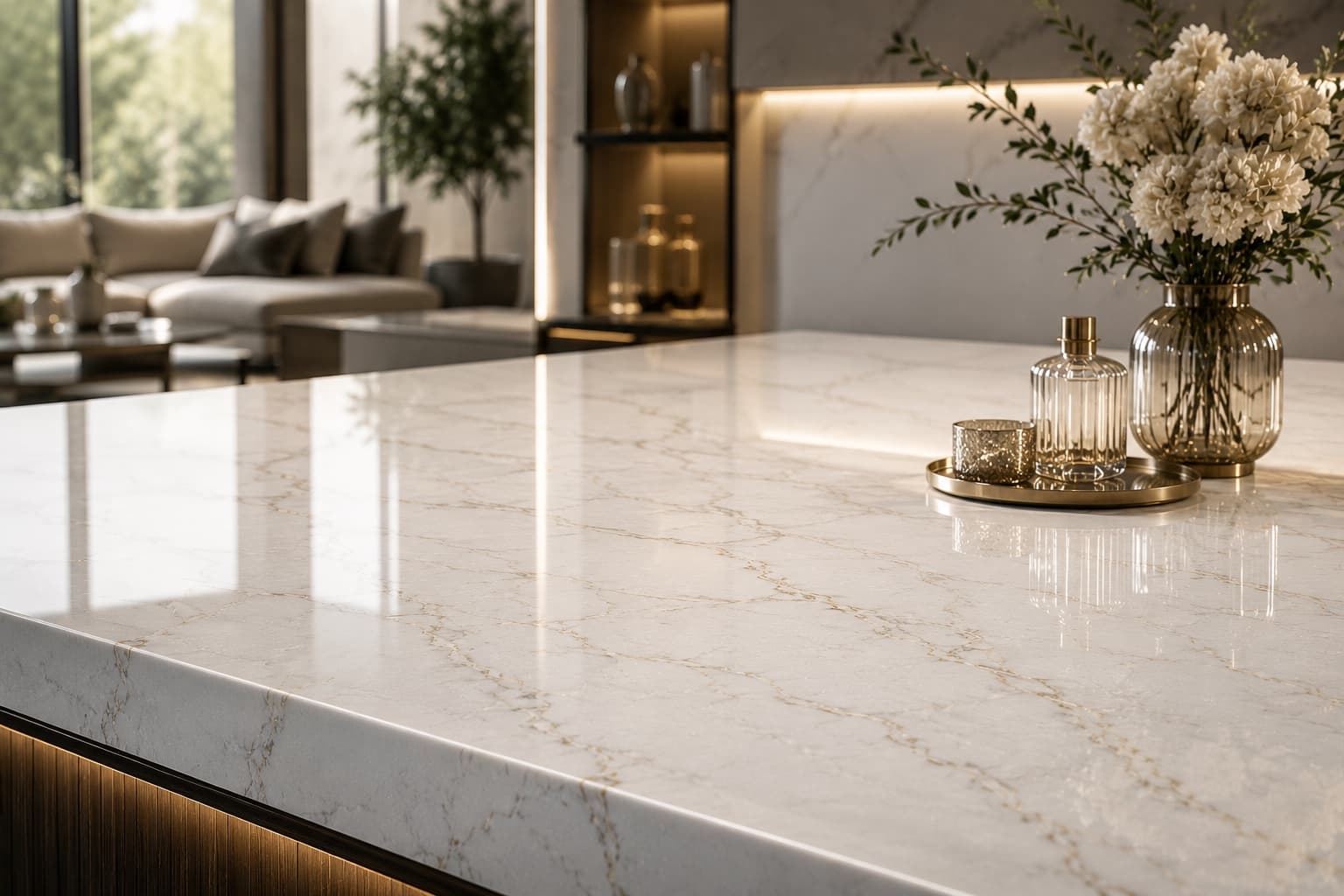
Quartz countertops (brands like Caesarstone, Silestone, and Cambria) are engineered surfaces made from roughly 90–95% ground quartz particles bound with polymer resins. The manufacturing process produces a non-porous, highly consistent surface.
Because it's non-porous, quartz never needs sealing. It resists staining from wine, coffee, and oil better than most natural stones. The tradeoff: it's not heat-resistant the way granite or quartzite is. Setting a hot pan directly on quartz can discolor or crack the resin binders — always use a trivet.
How they compare side by side
Maintenance: Quartz wins. No sealing, simpler daily care. Quartzite requires annual sealing and gentle cleaners.
Heat resistance: Quartzite wins. Natural stone handles heat well; quartz resins can discolor under sustained heat.
Appearance: Quartzite wins for uniqueness. Each slab is one-of-a-kind. Quartz offers pattern consistency — useful for large installations where matching matters.
Price: Comparable. Both range roughly $65–$120/sq ft installed depending on the specific material and edge profile. Super-premium quartzite (Taj Mahal, Calacatta Macaubas) can run higher.
Durability: Both are excellent. Quartzite is harder; quartz is more forgiving of acids.
Which one should you choose?
If you want zero maintenance and don't want to think about sealing, choose quartz. It's the right call for most busy family kitchens.
If you want the look and feel of natural stone — the veining variation, the depth, the fact that no two slabs are alike — choose quartzite. The annual sealing is a 30-minute task and well worth it for most homeowners who care about the aesthetic.
Come to our Kent showroom and we'll pull slabs of both. The difference in feel and visual depth is immediately obvious in person in a way photos can't capture.